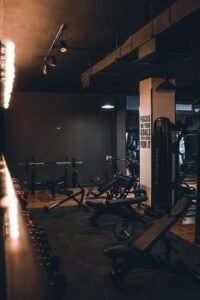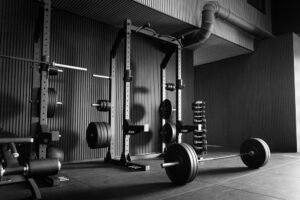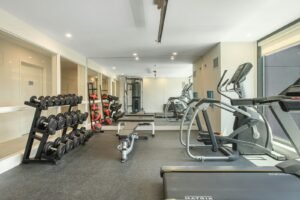

Opening or refitting a gym is one of the largest capital decisions an owner makes, and it is unusually unforgiving. Get the specification wrong and you are not out a few hundred dollars — you are running a floor that queues at peak, breaks under load, or wastes square footage you are paying rent on.
This guide covers how to approach that decision in the order that actually matters.
Start with throughput, not equipment
Before looking at a single machine, answer three questions: how many members train at peak hour, what do they train, and how long does a typical session last? Those numbers drive everything downstream.
A 24-hour gym with heavy peak clustering needs redundancy — multiple squat racks, several treadmills — because a queue at 6pm is a cancelled membership. A personal-training studio with booked sessions needs range instead of duplication: one of each, chosen well.
Understand what commercial-grade means
The phrase is used loosely, so it is worth being precise. Genuinely commercial equipment differs in:
- Frame gauge. Heavier steel, thicker uprights, better welds.
- Upholstery. Commercial-rated vinyl that survives sweat, cleaning chemicals and constant use.
- Bearings, cables and pulleys. Sized for repeated loading rather than occasional use.
- Load ratings. Rated assuming a queue, not a single user three times a week.
The difference does not always show on day one. It shows on day one thousand.
Get the zone ratios right
Most new gyms over-buy cardio and under-buy racks, because cardio is easier to visualise and cheaper per unit. In practice, racks and benches are the bottleneck in almost every general-purpose gym at peak time.
A workable starting point for a general fitness facility:
- Strength. A spread of selectorised and plate-loaded stations covering the major movement patterns — press, row, pulldown, leg press, leg curl and extension.
- Racks and platforms. Enough that a queue never forms at peak. This is usually more than owners first budget for.
- Cardio. A mix of treadmills, bikes, rowers and ellipticals, sited where they have airflow and sightlines.
- Free weights. A full dumbbell progression with adequate benching, plus barbells and plates.
- Functional space. Open floor with rigs, sleds and conditioning tools — the cheapest square footage in the building to fill well.
Plan the floor before you buy
Equipment bought piecemeal produces mismatched footprints, awkward walkways and dead corners. Sourcing the floor as one system keeps sightlines clean, gets circulation right, and usually improves the price.
Practical constraints to check early: ceiling height (rigs and overhead pressing), floor loading, door and corridor widths for delivery, and power for cardio.
Phase the build if you need to
You do not have to buy everything at once. Anchor the floor with strength and racks, add secondary stations and accessories as membership grows. Because our range spans five budget tiers, from under $100 to $2,000 and above, phasing is realistic without ending up with equipment you outgrow.
Where to get help
ProEfficient Fitness supplies commercial gyms, studios and training facilities, and offers custom gym buildout packages with volume discounts. If you send us your floor area, ceiling height, peak member numbers and budget, we will help you spec it.