
Chest training at home runs into a specific problem: the barbell bench press needs a rack, a spotter or safeties to be done safely at load, and plenty of home setups have none of the three. Chest machines solve that, but they also take floor space and vary widely in what they actually give you. This guide covers which type suits a home gym, what to look for, and when a bench and dumbbells would serve you better.
The main types, and who each suits
Chest press machines
A seated horizontal press on a fixed path. The movement is guided, so you can train close to failure without a spotter — the single biggest argument for a machine in a home gym. Selectorised versions use a weight stack; plate-loaded versions use your existing plates, which costs less up front and takes less depth.
Pec deck and chest fly machines
An arcing movement that isolates the chest with minimal triceps involvement. Useful as an accessory, poor as a foundation — you cannot load a fly the way you can load a press, so it should supplement pressing rather than replace it.
Cable crossover and functional trainers
The most versatile option by a wide margin. Pulley machines cover chest work at every angle plus back, shoulders, arms and core. They take more width than a single-station machine, but they replace several of them.
Multi-station gyms
Several stations on one frame. Space-efficient on paper, but each individual station is usually a compromise, and only one person can train at a time. Worth it when floor space is the binding constraint and budget is not.
What to check before buying
- Full footprint, including travel. Arms and handles sweep well beyond the frame. Measure the space the machine uses in motion, not the space it occupies at rest.
- Ceiling height. Cable crossovers and functional trainers need genuine height. Check before ordering.
- Adjustability. Seat height and back pad angle decide whether the machine fits you and everyone else in the house. Fixed-position machines suit one body well and others badly.
- Loading method. Weight stacks are fast to change and quiet. Plate-loaded is cheaper and uses plates you may already own, but it is slower between sets.
- Frame weight and stability. Light frames shift under heavy pressing. Rated capacity matters less than whether the thing stays planted.
Machine or bench and dumbbells?
This is the question worth answering honestly before spending anything.
| Chest machine | Bench and dumbbells | |
|---|---|---|
| Safe to failure alone | Yes | Dumbbells, mostly — barbell, no |
| Floor space | Fixed and significant | Small; bench stores upright |
| Exercise variety | Narrow per station | Very wide |
| Cost for a given load | Higher | Lower |
| Learning curve | Minimal | Some technique required |
| Stabiliser recruitment | Low | High |
For most home gyms, an adjustable bench and a set of dumbbells delivers more chest training per pound and per square foot than a dedicated machine. The machine earns its place when you train alone at heavy loads, when a shoulder or wrist issue makes the fixed path more comfortable, or when you want to push close to failure without worrying about getting out from under the weight.
A sensible way to add chest work to a home gym
- Bench and dumbbells first. Flat, incline and decline pressing plus flyes, all from one bench.
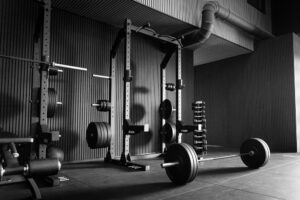
- Add a rack if you want to barbell bench. A power rack with safeties makes pressing alone genuinely safe.
- Add a machine or pulley station last. Once you know your floor layout and your training actually demands it.
Buying in this order means you are never waiting on a delivery to train chest, and you learn what you need before committing the floor space.
Frequently asked questions
Are chest machines as effective as free weights?
For building the chest specifically, a well-executed machine press is a perfectly effective stimulus. Free weights additionally recruit stabilising muscles and carry over better to other movements, which is why most programmes use both rather than choosing one.
What ceiling height does a cable crossover need?
More than most people assume — the upper pulleys sit high and you need clearance above them. Measure before ordering, and check the listed overall height against your room.
Can I train chest with no machine and no bench?
Yes. Push-up variations, floor presses with dumbbells and resistance bands all work. A bench simply widens the range of angles available to you.
Plate-loaded or selectorised at home?
Plate-loaded if you already own plates and want to keep cost and depth down. Selectorised if you value fast weight changes and a tidier footprint, and do not mind paying for the stack.
How is a machine delivered?
Shipping is a flat $9.99 and orders over $500 ship free, which most machines will clear. These are large, heavy items — check your access route and tell us about stairs or narrow doorways before ordering.
Next steps
Browse chest machines, benches and the full home gym equipment range. For planning the whole room, see our at-home fitness equipment guide.